Resource Circulation and Waste Sorting in South Korea — Chapter 2: Transparent PET Bottle Sorting and Label Removal Protocols
South Korea’s Ministry of Environment rolled out the separate disposal of clear PET bottles in apartment complexes in December 2020 and in detached houses nationwide in December 2021. Before that, all plastics were collected together. Now colorless, transparent water and drink bottles must be kept apart from general plastics and put in a dedicated bin.
It looks like just one more sorting category, but it reflects how polymer chemistry and the recycling supply chain work.
1. Filament yarn versus staple fiber
Under mixed collection, clear PET bottles were collected together with colored PET (green soda bottles, brown beer bottles), multi-layer plastics (OTHER) and dirt. Even after shredding into recycled flakes, the color was uneven and the material weaker, so it was mostly downcycled into low-grade staple fiber for stuffing, twine and non-woven fabric.
Clean, colorless PET bottles can be purified into filament yarn, a high-value fiber for clothing, outdoor wear, bags and running-shoe uppers. In the end they can even become new bottles again, closing the bottle-to-bottle loop.
[Mixed PET collection] ───> low-purity flakes ───> non-woven fabric/egg trays/twine (staple fiber: limited reuse)
[Clear PET separated]  ───> high-purity pellets ──> clothing/shoes/new bottles (filament & bottle-to-bottle)
2. The four steps and the science of density separation
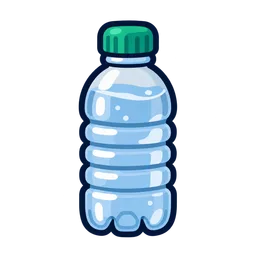
Clear PET bottles go out following the Ministry of Environment’s four common steps.
- Empty: Pour out all the contents.
- Rinse: Lightly rinse the inside with water to wash away drink residue.
- Remove the label: Peel the plastic label (mostly PP or PS) completely along the perforation and put it out with plastic film.
- Crush and close the cap: Flatten the bottle, then screw the cap back on.
3. What not to put in the clear PET bin
Not every clear plastic container belongs in the clear PET bin. Only colorless bottles that held drinking water or beverages qualify.
| Item | Material and features | Correct channel |
|---|---|---|
| Clear water, sparkling water and drink bottles | Colorless polyethylene terephthalate (PET) | Dedicated clear PET bin |
| Disposable clear takeout cups | PS (polystyrene) or PET of mixed grades | General plastics |
| Clear fruit and salad trays | Mostly extruded sheet (PET/OTHER) | General plastics |
| Clear sauce, soy sauce and cooking-oil bottles | Oil or concentrated sauce soaks in and can’t be washed out | General plastics (regular bag if badly soiled) |
| Colored PET bottles (green, brown, etc.) | PET with added dye | General plastics |
Summary
Sorted correctly, clear PET bottles can become top-grade fiber without any new fossil-based raw material.
The key steps are removing the label and crushing the bottle and closing the cap. Chapter 3 covers the line between food waste and general waste, the most confusing call at home, from the viewpoint of how food waste becomes animal feed.
Oiyo
Editorial DeskThe OIYO editorial desk researches money, law, lifestyle, and self-understanding topics against primary sources and public statistics. Every piece carries source notes and is reviewed on a regular cycle for accuracy and usefulness.